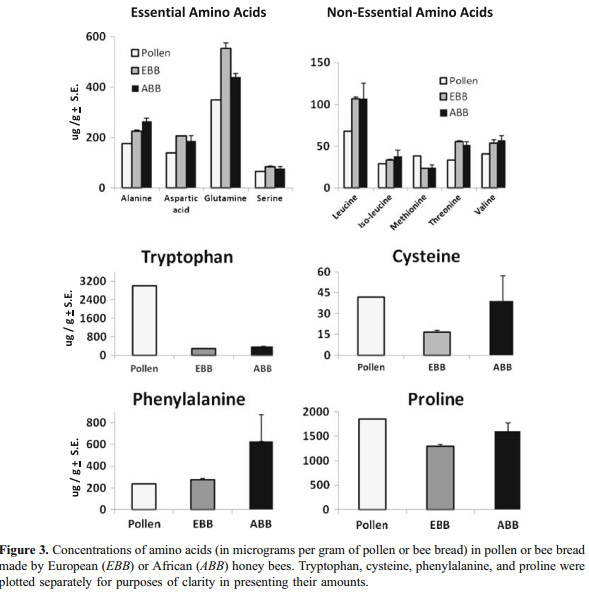
Resume: The average pH of the pollen is 4.7, the average pH of EBB and ABB is 3.9. Bees consume more ABB (beebread from africanized bees). Bees of both subspecies consumed more ABB than EBB. There was about 20 % more proline in ABB than EBB.
Leucine, threonine - 60% more in beebrad.
Valine - 25% more in beebread.
Proline - 20% more in beebread.
Alanine, aspartic acid, glutamine - more in beebread.
Tryptophan - less in beebread, consumed by microbes in fermentation.
Of the 10 amino acids that are essential for honey bees, all but histidine were detected in the pollen. Lysine and asparagine could not be accurately quantified in the bee bread due to interference from excess sugars. This also was the case for tyrosine in ABB. This amino acid was present in the pollen at a concentration of 198.6 μg/g and was quantified in one EBB sample (160.5 μg / g). In most cases, amino acid concentrations measured in bee bread were higher than in the pollen (Figure 3). For example, concentrations of leucine and threonine were about 60 % higher in bee bread compared with pollen, and valine concentrations were about 25 % higher. Alanine, aspartic acid, and glutamine levels also were higher in bee bread than in pollen. Amino acid concentrations did not differ greatly between ABB and EBB with the exception of phenylalanine and cysteine. Phenylalanine levels were about twice as high in ABB compared with either EBB or pollen. Cysteine concentrations were lower in EBB compared with ABB or pollen. Tryptophan was the only amino acid present in higher concentrations in pollen than in EBB or ABB. Concentrations of proline in pollen and ABB were higher than in EBB.
Full article