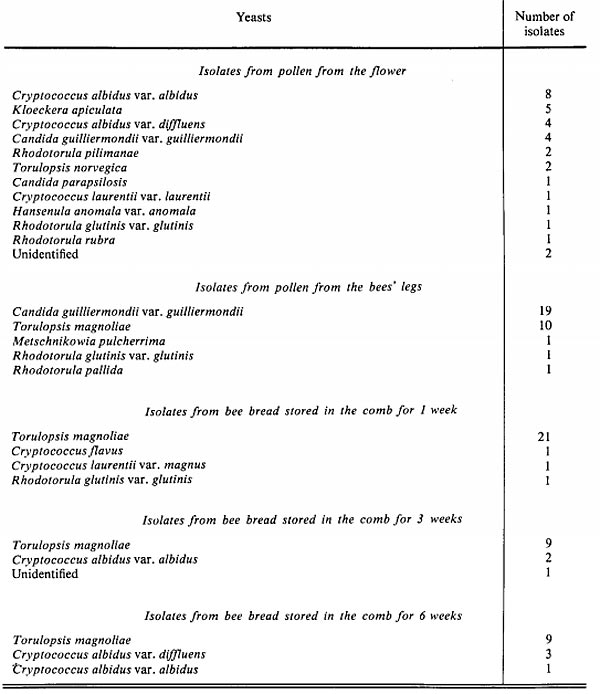
One-hundred and thirteen yeasts belonging to seven genera were isolated from almond (Prunus communis) pollen from the flower, from pollen pellets from traps placed on bee (Apis mellifera) hives in the orchard, and from pollen stored in comb cells of the hive (bee bread) for one, three, and six weeks. Torulopsis magnoliae was the most common isolate and was found in all pollen samples except pollen from the flower. Thus, the bees may have added it to the pollen. The number of isolates and species decreased with time and storage. In general, most of the yeast species from pollen from the flower and the trap were not found in bee bread. Also, yeast isolates from pollen from the flower and the trap fermented more sugars and assimilated more carbon compounds than those from bee bread.
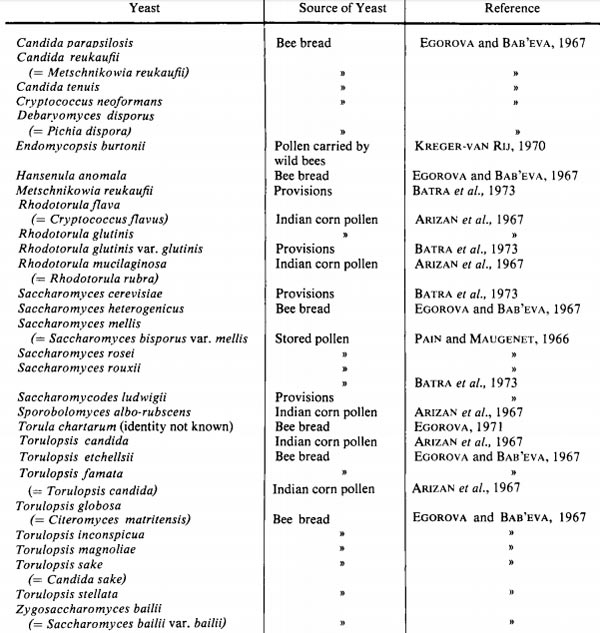
Also, bee bread contains vitamin K and a milk-digesting enzyme, pollen collected from the legs of foraging bees does not. HEVTCHIK (1950) conducted microbiological analyses of fresh pollen and pollen stored in comb cells and reported four phases of microbial development in fermenting pollen that occurred during seven days from the time of the appearance of lactic acid bacteria, yeasts, indole-producing bacteria (Escherichia), and sporulating aerobic bacteria. The first phase lasted 12 hours and was characterized by the development of a heterogenous group of microorganisms including yeasts. In the second phase, anaerobic lactic acid bacteria (Streptococcus) utilized growth factors produced by the yeasts and putrefactive bacteria and lowered the pH of the pollen. The third phase was characterized by the disappearance of Streptococcus and the development of Lactobacillus that produce more acid than Streptococcus. The fourth phase, which began at the end of the seventh day, was characterized by the disappearance of the lactic acid bacteria and certain yeasts due to the large quantity of lactic acid produced. The pollen became microbially sterile, and the pH was approximately 4. During the course of this study, CHEVTIK isolated from fresh and fermented pollen 77 groups of yeasts that he considered to be sources of proteins, lipids, and necessary growth factors.
This lactic acid fermentation was completed by the end of about 15 days though the responsible organisms maintained a stationary population for several months. The yeasts, which were present in small numbers initially, increased after fermentation and subsisted in stored pollen longer than other organisms. These researchers seeded pollen sterilized by gamma irradiation with Lactobacillus and concluded that a pure lactic acid fermentation produced an unappetizing product of poor nutritive value for bees. Thus, they thought that the yeasts played the most important role from the nutritional standpoint. It has also been reported that the enzyme systems involved in the fermentation of pollen are similar to yeast enzyme systems.
Full article